

The First 24 Hours After Water Damage: What Actually Matters
Most of the difference between a two-room repair and a whole-floor rebuild is decided before a restoration crew ever arrives. Here is the order to do things in.
Stop the water before anything else
Every minute the source is still running is more square footage on the invoice. Find the shut-off for the fixture if the leak is local, and the main if it is not. In most South Florida single-family homes the main is at the front of the property near the meter box; in a condo it is usually inside the unit in a laundry or utility closet. Find yours now, before you need it in the dark.
If the water is coming from an appliance, unplug it. If it is anywhere near an outlet, a panel or a light fitting, turn that circuit off at the breaker before you walk through it.
Photograph everything, then start moving things
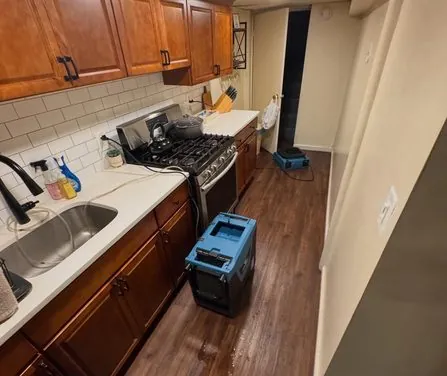
Insurers make decisions on what they can see. Before you move a single item, take wide shots of each affected room, then close-ups of the source, the standing water and any damaged contents. Keep photographing as the water recedes - the difference between the first hour and the third is often the most useful evidence you have.
Then lift what you can. Furniture legs stain carpet and flooring within hours. Get rugs off wood, put foil or blocks under furniture feet, and move electronics, documents and anything with sentimental value to a dry room.
Do not trust the surface
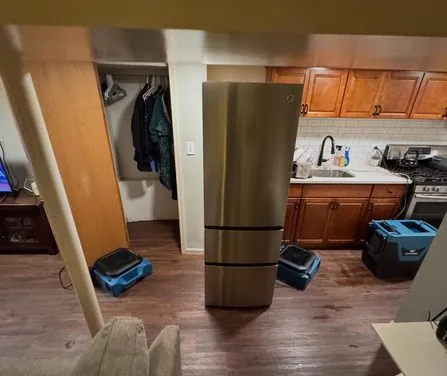
This is where most people lose the job. The floor looks dry, so the assumption is that the problem is over. Water has already moved into the wall cavity, under the cabinet toe kicks and beneath the flooring, and none of that is visible or reachable with a towel.
In Miami's humidity a wet wall cavity does not dry on its own. It stays wet, and somewhere between 24 and 48 hours later it starts growing something. A restoration crew's meters exist for exactly this reason: to find the water you cannot see and prove it is gone at the end.
Call your insurer and a restoration contractor in parallel
You do not need to wait for an adjuster's visit before mitigation begins. Every homeowner's policy carries a duty to protect the property from further damage, and drying is that duty in practice. Call it in, get a claim number, and get crews moving the same day.
What you should not do is authorise demolition before anyone has documented the loss, or throw away damaged contents before they are inventoried. Photograph, list, then dispose.
What we do when we arrive
Extract standing water, map the moisture with meters and thermal imaging, remove what cannot be saved, and set drying equipment on a plan with a target rather than an estimate. Readings get logged daily and the equipment stays until the numbers - not the calendar - say the structure is dry.
Dealing with this right now rather than reading about it? Call (305) 555-0142 — the assessment is free and crews run 24/7 across Miami-Dade.